
Best Time for Umrah & How to Prepare for a Fulfilling Trip
Unlike Hajj, Umrah doesn’t have a fixed date. You can go in any month, any season, as many times as you want. That freedom is a blessing — but it also means you have to actually think about when works best for you, instead of just picking a random week off from work.
So let’s break this down properly: when should you go, and what do you need to get ready before you leave Bangladesh?
Is There a “Best” Month for Umrah? Short Answer: It Depends on You
There’s no single perfect month for everyone. The right time depends on four things — your budget, your physical health, how much crowd you can handle, and how much spiritual weight you want the trip to carry. Here’s how the year actually breaks down.
Ramadan — The Most Rewarding, But Also the Busiest
Most scholars agree that Umrah performed during Ramadan carries extraordinary reward, with the Prophet (peace be upon him) describing it as equal in reward to Hajj. This is why Ramadan is the single most popular month for Umrah among Bangladeshi pilgrims.
The trade-off is real, though. Hotels near the Haram get booked out weeks in advance, prices climb 30-50% above normal, and the Haram itself gets extremely crowded, especially in the last ten nights. If you go during Ramadan, aim for the first 20 days — it’s calmer, and you’ll still get the reward.
Good for: pilgrims chasing maximum spiritual reward and who don’t mind crowds or higher prices.
November to February — The Comfort Season
This stretch is consistently recommended across almost every Umrah guide, and for a simple reason: the weather in Makkah and Madinah is mild (around 28-32°C) instead of brutally hot, which makes walking to and from the Haram, and standing through long prayers, far easier on your body.
This window also lines up with winter school holidays in Bangladesh, which makes it the most practical time for families traveling with children or older parents.
Good for: first-timers, families with kids, and elderly pilgrims who need manageable weather and pace.
Muharram and Safar (Right After Hajj) — The Quiet Season
Once Hajj ends, the crowds thin out dramatically for a couple of months. This post-Hajj window is one of the best-kept secrets for a peaceful, unhurried Umrah — shorter queues for Tawaf, easier hotel bookings, and noticeably lower prices.
Good for: pilgrims who want a slow, reflective Umrah without pushing through crowds, and anyone trying to save money.
March to May, and September to October — The Value Months
These shoulder-season months tend to bring lower package prices while avoiding the extreme heat of peak summer. Weather is warmer than winter but still tolerable, and crowds are moderate.
Good for: budget-conscious pilgrims who still want reasonably comfortable weather.
June to August — Cheapest, But Genuinely Harsh
Temperatures in Makkah regularly cross 40-41°C in these months. Packages are at their cheapest here, but this window really only suits healthy adults who can handle the heat, and even then, rituals should be timed for early morning or late night with frequent breaks indoors.
Good for: heat-tolerant travelers chasing the lowest possible price — not recommended for elderly pilgrims or young children.
A Quick Note on Days of the Week
Locally, Friday is the weekend in Saudi Arabia, so Fridays tend to be noticeably more crowded at the Haram — even outside of Ramadan or Hajj season. If your schedule allows it, Sunday, Tuesday, and Wednesday tend to be calmer days to plan your main rituals around.
How to Prepare for a Fulfilling Umrah Trip
Picking the right month is only half the job. Here’s what actually matters in preparation — the things that decide whether your trip feels smooth or stressful.
1. Sort Your Documents Early
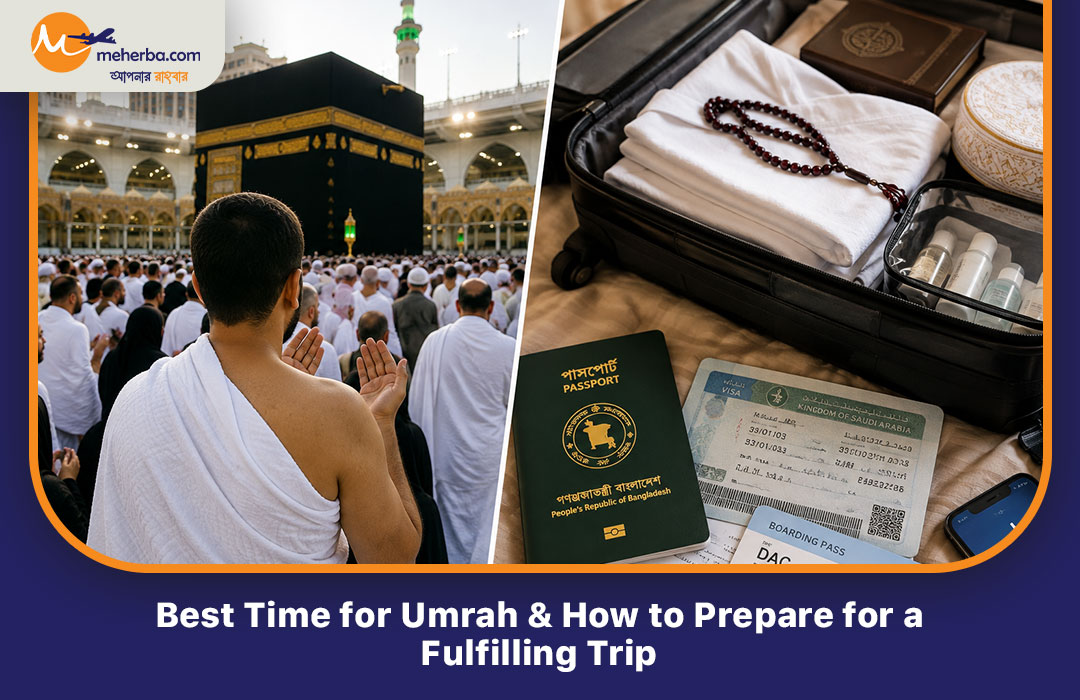
You’ll need a passport valid for at least 6 months, recent passport-sized photos with a white background, and in most cases a health/vaccination certificate. If you’re a woman under 45 traveling without your husband, you’ll need Mahram documentation — check this early, because it’s the single most common reason visa applications get delayed.
2. Book Your Visa With Enough Lead Time
Umrah visa processing usually takes about 3 to 7 working days once your documents are complete — but during Ramadan or other peak periods, it can stretch to 10-14 working days. A safe rule of thumb is to submit your documents at least 3 weeks before your intended travel date.
3. Choose Your Package Based on Hotel Distance, Not Just Price
“Near Haram” means different things to different agencies — sometimes it’s a 3-minute walk, sometimes 25 minutes. Always ask for the exact hotel name and the real distance in meters, not vague marketing language, before you commit.
4. Prepare Physically Before You Fly
You’ll be walking far more than usual — Tawaf alone involves several kilometers of walking. If you can, start light daily walks a few weeks before departure, especially if you’re older or not used to long periods on your feet.
5. Learn the Rituals Before You Land
Don’t leave learning the steps of Umrah — Ihram, Tawaf, Sa’i, and Halq/Taqsir — for the last minute. Most reputable agencies provide a pre-departure briefing or a guide (Mu’allim); make use of it, and ask questions before you go rather than being unsure once you’re there.
6. Pack for the Climate, Not Just the Ritual
Light, breathable clothing helps a lot, especially outside the winter months. Carry a refillable water bottle — staying hydrated matters more in Makkah’s climate than people expect, particularly if you’re traveling outside the cooler months.
7. Choose a Package With Real Ground Support
A good Umrah agency doesn’t just get you there — it stays reachable while you’re in Makkah and Madinah, in case a hotel issue comes up or you need help navigating your Ziyarah tours. This is worth checking before you book, not after something goes wrong.
Bringing It Together
If comfort matters most to you, aim for November to February. If spiritual reward is your priority and you can handle crowds, go for Ramadan. If your budget is tight but you still want manageable weather, look at the shoulder months. And whichever month you pick, give yourself at least 3 weeks of lead time for visa processing and choose an agency that’s transparent about hotel distance, pricing, and support once you land.
If you’d like guidance on picking the right month and package together, Meherba offers Umrah packages across multiple durations — including Ramadan-specific options — with the flight, visa, and hotel handled by one team so you’re not coordinating three vendors on your own.
Frequently Asked Questions
Is Ramadan really the best time for Umrah? Spiritually, yes — it’s considered equal in reward to Hajj. Practically, it’s also the busiest and most expensive month, so it suits pilgrims who don’t mind crowds.
What is the cheapest month to perform Umrah? The months right after Hajj (Muharram and Safar) and the peak summer months (June-August) tend to have the lowest prices, though summer comes with extreme heat.
How early should I apply for an Umrah visa from Bangladesh? At least 3 weeks before your travel date, and earlier during Ramadan or other peak seasons when processing can take up to two weeks.
Can elderly parents or young children perform Umrah comfortably? Yes, especially if you travel during November to February, when the weather is mildest and crowds are more manageable than during Ramadan or summer.